4 Days – Khajuraho Tour
Overview
Khajuraho is popular for its temples and world heritage sites. Visit these popular ancient Eastern and Western Temples. We have designed 2 Days Khajuraho Tour to explore the world heritage sites which has amazing sculptures and architecture that will mesmerize you and will give a wonderful feeling.
Included/Exclude
- 01 Night Accommodation on twin sharing Basis./li>
- Breakfast at Hotel.
- One Dinner at Local Restaurant.
- Monuments Fee.
- English Speaking Tour Guide.
- Pickup and Drop off service.
- Sightseeing by car in the Agra city.
- Unlimited Mineral Bottled Water
- Tour Guide Service.
- Gratuities (optional).
- Alcoholic drinks (available to purchase).
- Lunch / Dinner or any other meal.
Tour Itinerary
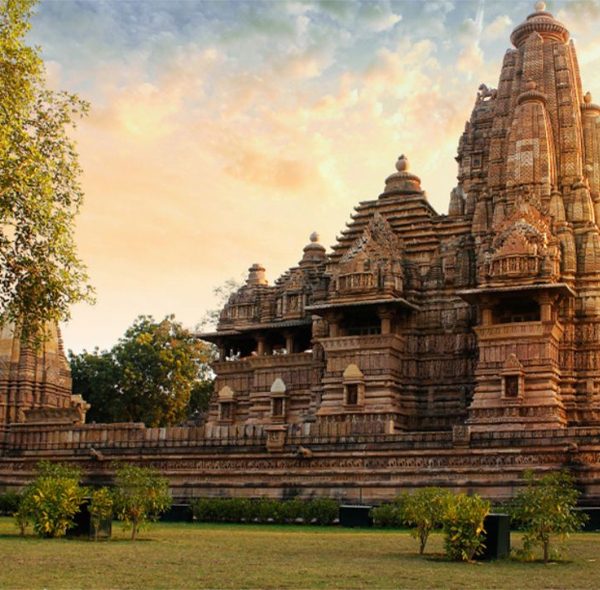
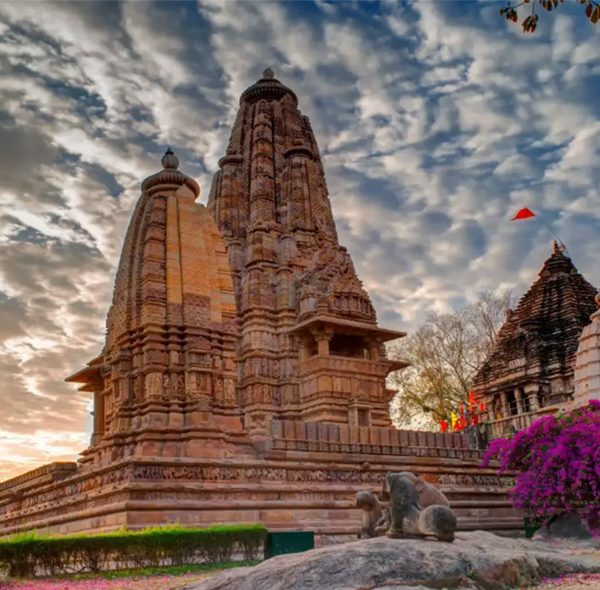
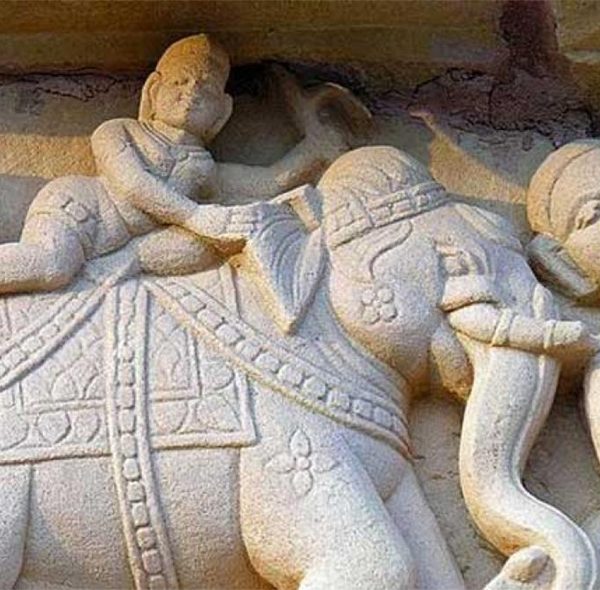
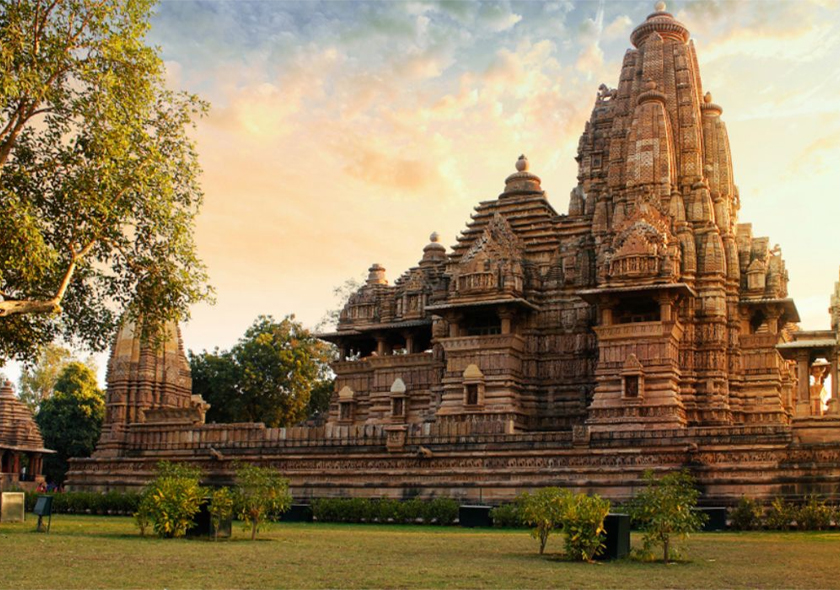
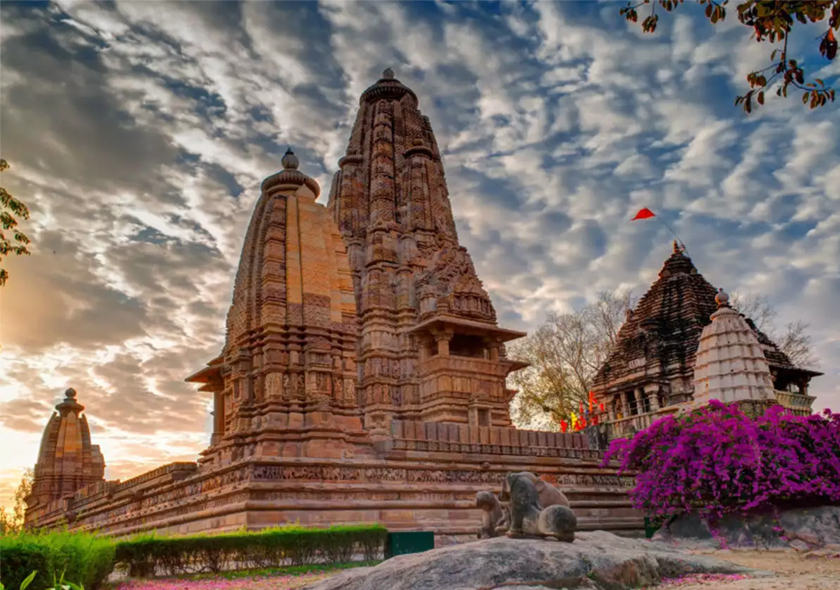
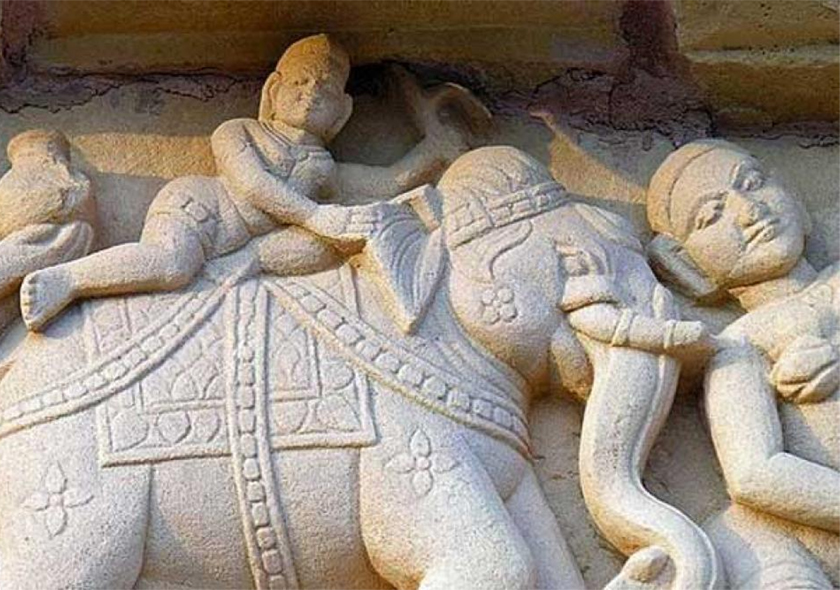
The Western Temple Group is the true essence of the Khajuraho Temple Group, which was designated as a World Cultural Heritage in 1986. It has been developed into a park with hundreds of thousands of square meters, and the temples are surrounded by trees. The materials for the temple carvings are taken from light yellow sandstones from the Panna quarry, 40 kilometers south of Khajuraho, which are soft in texture and pleasing in color. The temple complex includes the Vishwanatha Temple, the Lakshmana Temple and the very famous Kandaria Mahadeva Temple dedicated to the three major gods of India. All the temples are magnificent, full of figures and sculptures expressing the love and life of various gods, which are stacked on the hill-like towers extending into the sky. Dense and dazzling. The goddesses in these carvings are full of bodies, not only depicting their daily life, but also showing the scenes of intercourse with male gods with the help of servants. There are also sculptures describing the army and animal sculptures, all of which are lifelike and full of life interest.The temples in Khajuraho were built during the Chandra Dynasty in the 10th century, because almost every temple here has carvings related to love on the walls, which is the embodiment of Hindu teachings that advocate fertility and fertility. Khajuraho was excavated from the ruins in the 19th century, and there are only more than 20 temple buildings left, which have high artistic value and are included in the World Cultural Heritage List. These temples belong to Brahmanism and Jainism, but the style is the same, with a richly decorated main building built on a high plinth, connected to a long corridor with skylights. The main building is clad in painted panels and topped with clusters of curvilinear spires, the taller of which are located directly above the sanctuary. After the rainy season in September every year until the sweltering summer in March is the comfortable season in Khajuraho, you can stroll under the clear sky and enjoy the temples at ease. The existing Khajuraho Group of Monuments is further divided into the west temple group, the east temple group and the south temple group. Among them, the west temple group is very magnificent, and there are many valuable carvings. There are 14 temples on the lawn of the west temple group. Each of the carvings has its own merits, most of which have been restored, and some temples can also be visited inside. Not to be missed is the Kandariya Mahadeva Temple, which is the larger one in the Western Temple Group. The main hall dedicated to Linga has a tower of more than 35 meters high, and there are many temples every day. Hindus come to worship with flowers and tika in hand. The inside and outside of the temple are covered with intricate carvings. There are more than 200 statues inside, and about 600 reliefs are also decorated on the outer walls. You can see a large number of gods and goddesses, which are the artistic manifestation of the prosperous period of the Chandra Dynasty. However, there are often monkeys here, so be careful.
A temple in the Western Temple Group dedicated to Lord Vishnu. Built in the mid-10th century. The temple consists of the main temple and the four-corner side halls, which is the standard form of the Chandra temple. The base of the temple is engraved with scenes of war, hunting, and queue.
It is the most typical and magnificent temple in the Khajuraho temple complex, and it is also the larger one. This light-yellow sandstone temple built on a high platform, including the main hall, the right winding corridor, the hall, the hall, and the porch, are arranged in a line from west to east. The main hall dedicated to Shiva is also built with a height of more than The 35-meter bamboo shoot-shaped Sikalo Pagoda. "Kandaria" (Kandariya) means cave, "Mahadeva" (Mahadeva) means Great Heaven (Great God), is one of the titles of Shiva. The Kandaria Mahadeva Temple was built by Vidyadala from about 1018 to 1022 AD to worship Shiva, one of the three major gods in India. Above the sanctuary of the main hall, the bamboo shoot-shaped King Sikalu Tower is 35 meters high, towering and towering. Around the main tower, there are 84 small towers in the shape of bamboo shoots, which surround the main tower. The tops of the main tower and the small tower are crowned with arched ribbed oblate capstones and aquarium ornaments. On the top of the three pyramid-shaped towers on the east side of the main hall, the hall, the passage hall and the porch, the heights gradually increase towards the main tower, and the contour curves are undulating in waves, showing a gradual upward trend, resulting in the effect of surging mountains, making it even more apparent The main peak is tall and straight, and the momentum is spectacular. The main hall of the temple and the outer wall of the synagogue are surrounded by three layers of high relief frieze. The frieze is full of group images of male and female gods, snake gods, tree gods, goddesses, ladies, dancing girls, lovers, and monsters. Every other niche, column, arch, bracket, is decorated with various statues. According to statistics, there are a total of 872 statues inside and outside the temple.
A temple in the Western Temple Group, built in the early 11th century. Originally a temple dedicated to Lord Vishnu, it was later changed to worship Shiva's concubine Snow Mountain God, and later changed to God Gali. The carvings of divine love here are well known.